Cart
0
You may also like






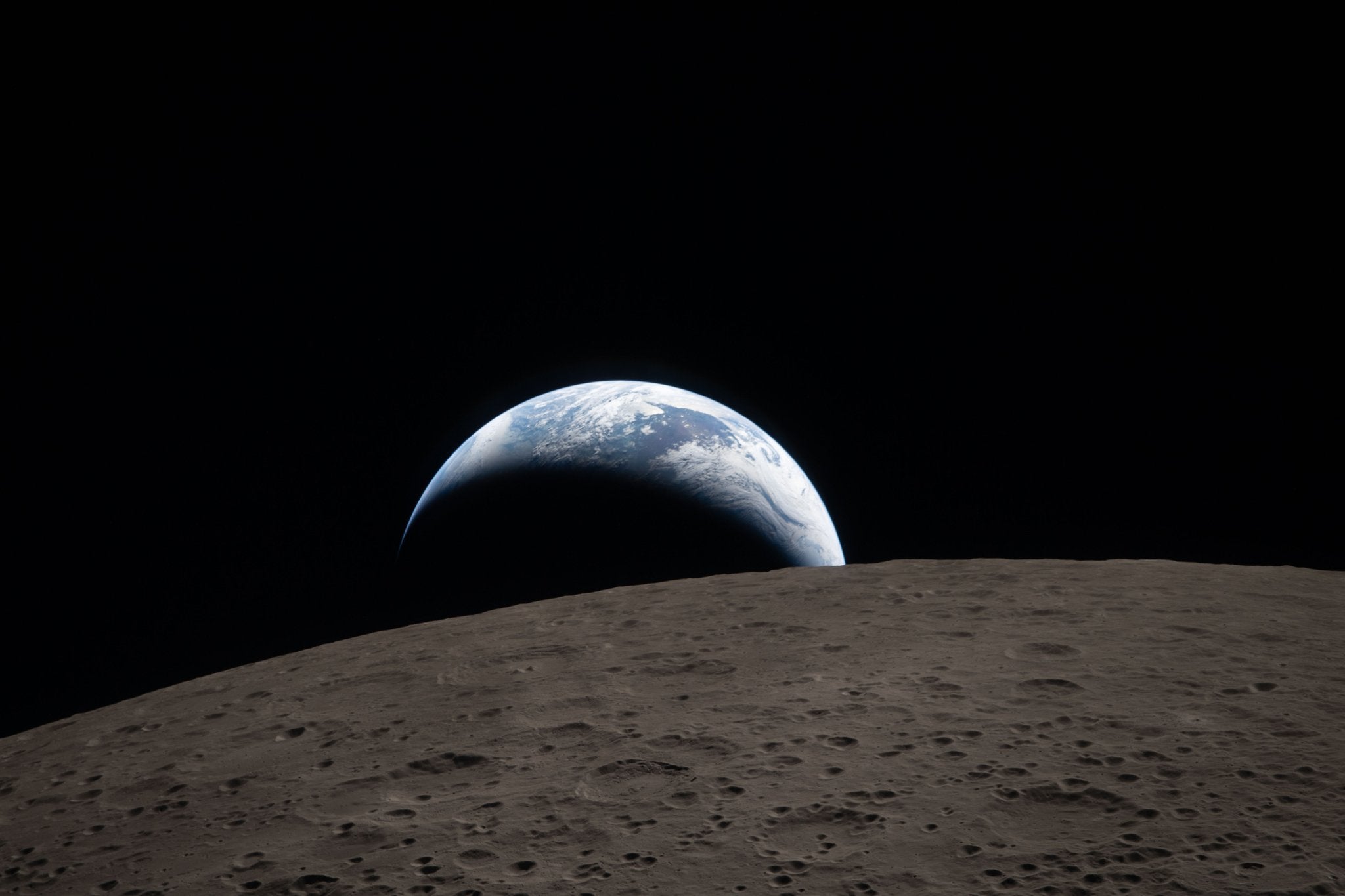
After a 54-year pause, humanity is finally heading back to the Moon.
The last time humans walked on the lunar surface was during Apollo 17 in 1972. Now, after multiple delays, NASA’s Artemis II mission is targeting its launch as early as February 6, 2026, marking a historic return to deep-space human exploration.
Artemis II will be the first crewed mission of the Artemis program and the first human flight around the Moon in the 21st century. Much like Apollo 8 in 1968, the mission will not land on the surface. Instead, the crew will orbit the Moon, validating systems and procedures in preparation for the future Artemis III lunar landing mission.
Artemis II will carry four astronauts, representing a new era of space exploration:
Reid Wiseman – Commander 🇺🇸
Victor Glover – Pilot 🇺🇸 (first Black astronaut to orbit the Moon)
Christina Koch – Mission Specialist 🇺🇸 (first woman to orbit the Moon)
Jeremy Hansen – Mission Specialist 🇨🇦 (first non-American to orbit the Moon)
This crew reflects both technical excellence and the international future of human spaceflight.

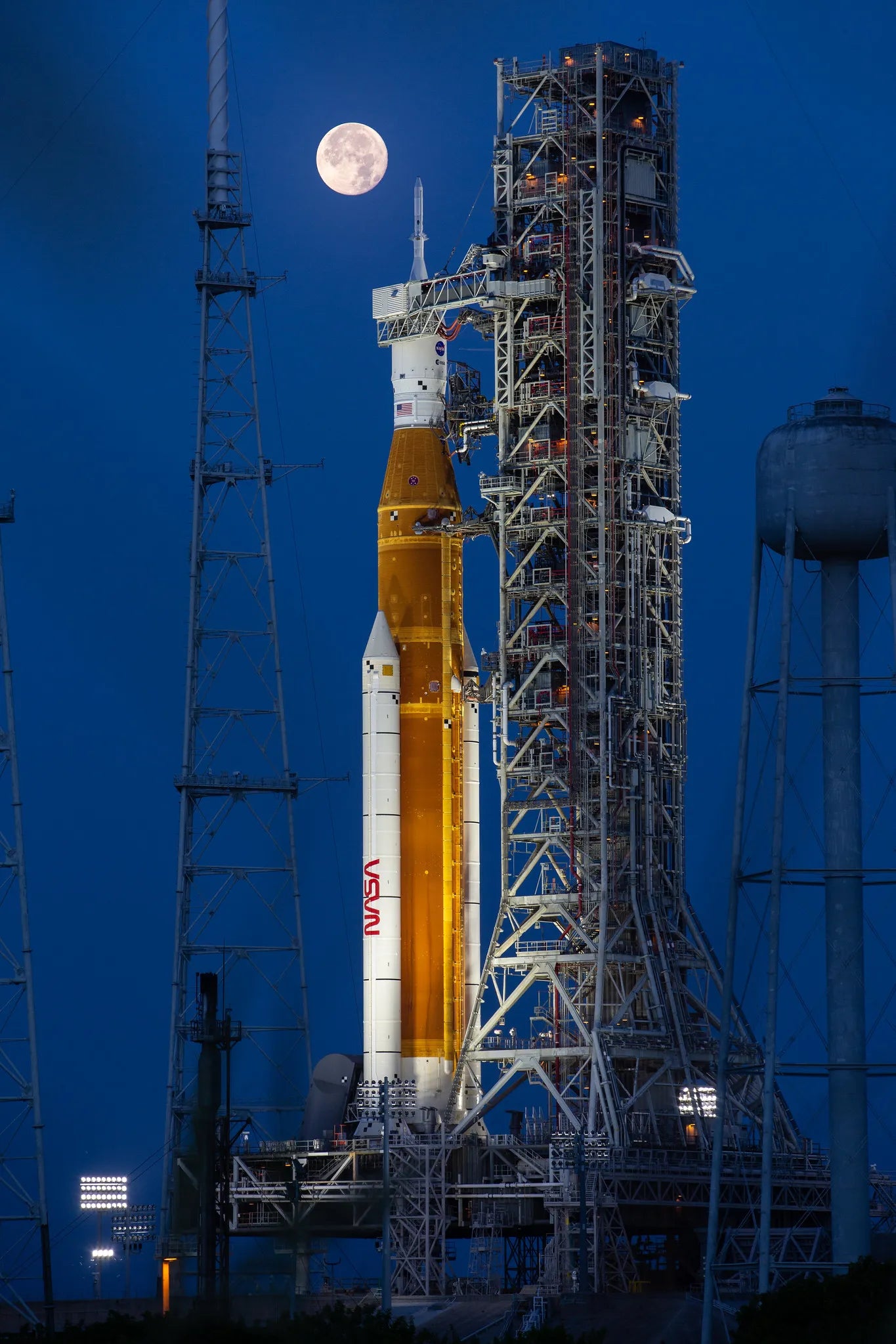
The Space Launch System (SLS) is NASA’s most powerful rocket, and much of its heritage comes from the Space Shuttle program. It uses two extended solid rocket boosters, each evolved from Shuttle designs.
These boosters are built from segments that previously flew:
Left booster hardware: 61 flights
Right booster hardware: 59 flights
Some segments were ground-fired during tests in 2016 and 2022.
The core stage is powered by four RS-25 engines, originally flown on the Space Shuttle:
RS-25 #2047 – Flew 15 missions, including the final Shuttle flight STS-135
RS-25 #2059 – Flew 5 missions, including Endeavour’s last flight
RS-25 #2061 – Flew 2 missions, supporting ISS construction
RS-25 #2062 – Never flown before, and the final RS-25 engine ever produced
For Artemis II, these engines will fly for the last time. After burnout, the core stage separates and falls into the Atlantic Ocean — it is not reused.

The Orion spacecraft, which will carry the astronauts to lunar orbit, also carries Shuttle heritage. Its propulsion system is derived from Space Shuttle orbital maneuvering hardware and includes components that previously flew on six Shuttle missions.
Although Artemis II is “only” a lunar-orbit mission, it carries the legacy of over 85 Space Shuttle flights across 43 years of operations. In a way, NASA is bringing nearly everything it learned from the Shuttle era into a single mission.
You could say humanity is standing on the shoulders of giants to reach deep space again. More bluntly, NASA had to use nearly all its remaining heritage hardware to make this mission possible.
It also reminds us how extraordinary the Apollo program truly was — a level of achievement that remains difficult to surpass even today.