Cart
0
You may also like





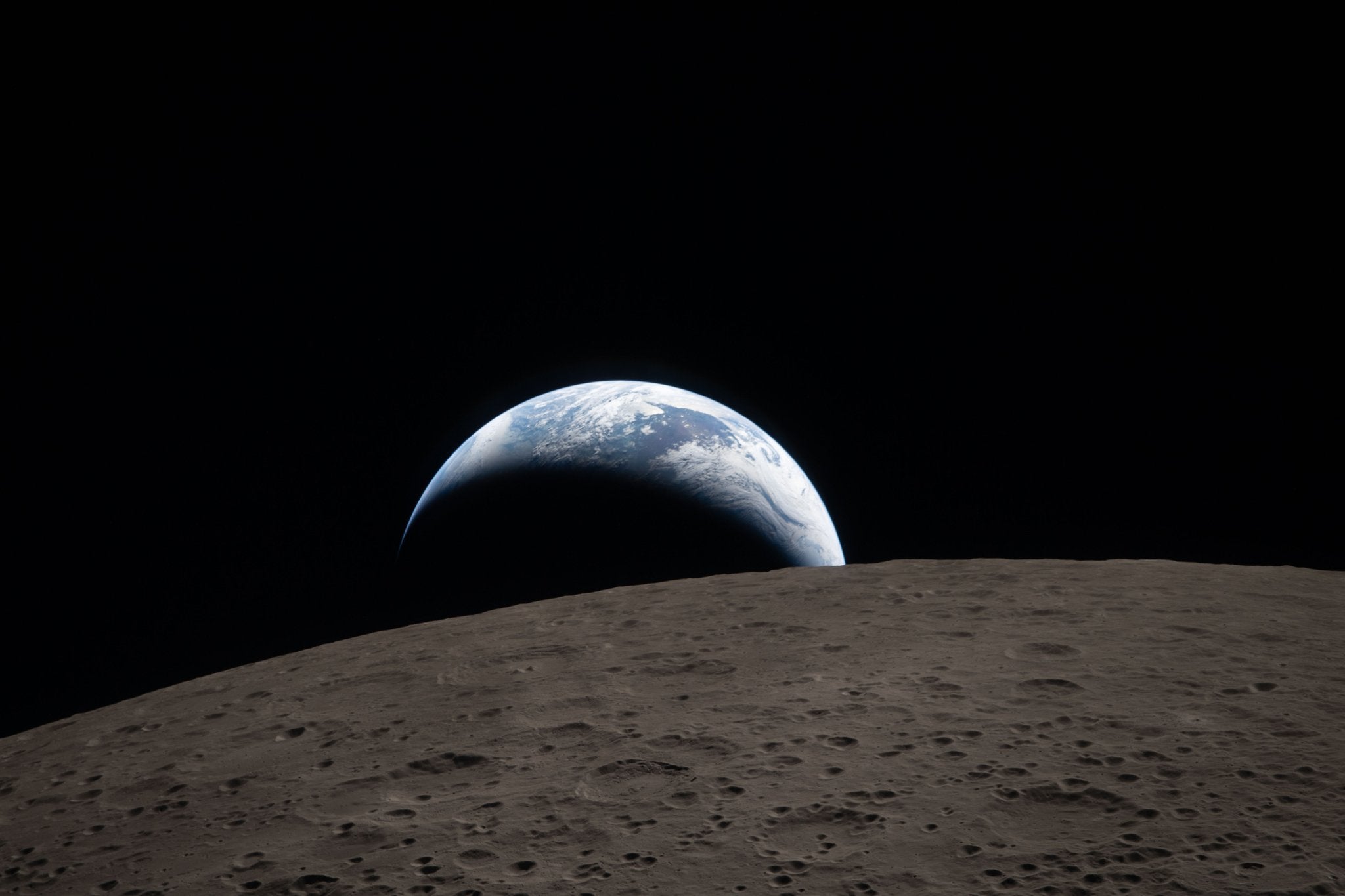
Here on Earth, we’ve all seen sunrises and sunsets, moonrises and moonsets—even solar and lunar eclipses.
But “Earthrise” and “Earth eclipse” are sights that most of us will never witness in our lifetime.
After a six-day journey, Artemis II has finally reached the Moon, breaking the distance record previously set by Apollo 13 (400,171 km). The mission reached a maximum distance of 406,773 km from Earth. Instead of entering lunar orbit, the spacecraft will use the Moon’s gravity to perform a flyby and transition into a return trajectory.
This historic pass has delivered some truly breathtaking images.

🌍 Earthrise
The first time humanity witnessed Earthrise was during the Apollo 8 mission in 1968, when astronaut William Anders captured the iconic photograph using a Hasselblad 500EL, with settings of 1/250s at f/11. The image later became one of the “100 photographs that changed the world.”

Artemis II follows a similar mission profile to Apollo 8, serving as a system validation flight for future lunar landings. Recreating the legendary Earthrise image with modern technology is one of the symbolic highlights of the mission. Even the mission’s zero-gravity indicator, “RISE,” draws inspiration from this iconic moment.

🌑 Earth Eclipse
As the farthest crewed mission in history, Artemis II has the altitude and trajectory needed to capture the Moon in its entirety. During the flyby over the Moon’s far side, the crew will experience a 41-minute communication blackout with mission control.
During this period, astronauts captured a rare phenomenon — an Earth eclipse, where the Moon completely blocks Earth from view. Illuminated by reflected sunlight, the Moon’s outline becomes visible, with faint details of its cratered surface emerging along the edges.

Although the exact camera settings for these images have not yet been released, it is highly likely that most photos from this mission were taken using Nikon D5 or Nikon Z9 systems.
Editor’s note: Absolutely mind-blowing. 🌌