Cart
0
You may also like




Recently in the United States, telecom operators, airlines, aircraft manufacturers, the FAA, and the FCC have found themselves in a major dispute over the rollout of 5G and its potential impact on aviation safety. The aviation industry argues that certain 5G frequencies may interfere with aircraft systems and has called for a reassessment, while telecom companies insist that billions have already been invested and further delays would cause significant economic losses.
This has turned into a clash between technological progress and operational safety.
5G is the fifth generation of wireless communication technology. Compared with today’s widely used 4G networks, 5G offers much faster data speeds and lower latency. To carry more data wirelessly, higher frequencies are generally used.
5G spectrum is commonly divided into:
600–900 MHz
2.3–4.7 GHz
24–47 GHz
In general, the higher the frequency, the faster the data speed. However, spectrum allocation varies by country and region, and multiple bands are often used together. In the United States, the main mid-band range for 5G is approximately 3.75–3.95 GHz.
The downside of higher frequencies is reduced transmission distance and penetration. To compensate, many more base stations are required, meaning 5G transmitters are placed far more densely than those used for 4G networks.
Aircraft are equipped with a system called the Radio Altimeter (RA). Unlike a barometric altimeter, which calculates altitude based on air pressure (QNH/QNE), the radio altimeter sends radar signals straight down and measures the reflected signal to determine the aircraft’s true height above the ground (QFE).
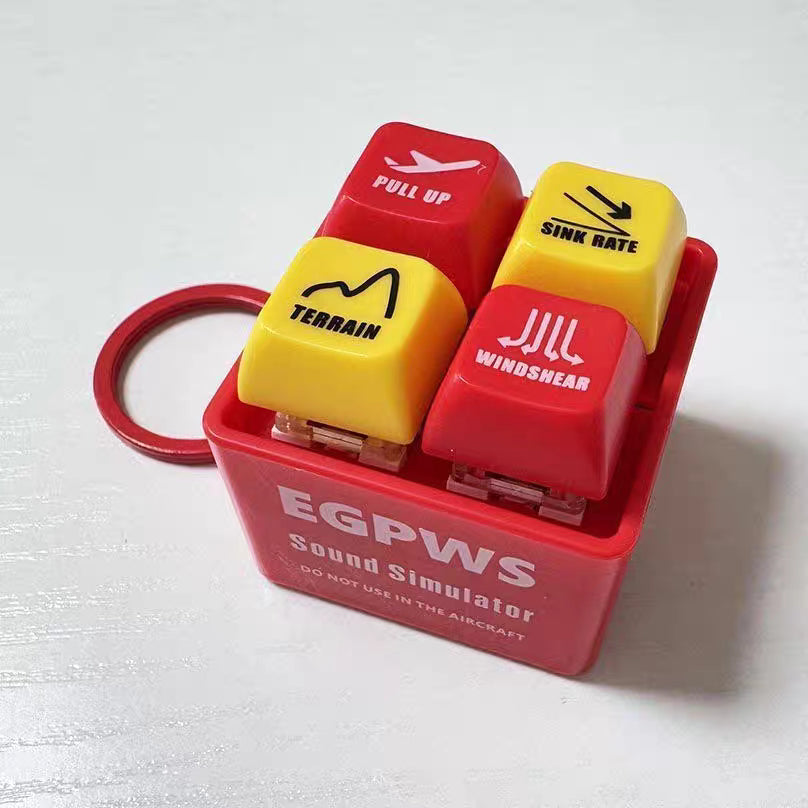
This information is critical during approach and landing, and when operating in complex terrain. Systems such as GPWS (Ground Proximity Warning System) rely on radio altimeter data to warn pilots when the aircraft is too close to the ground, triggering alerts such as “Pull up! Pull up!”
Most radio altimeters operate in the 4.2–4.4 GHz frequency band. This sits very close to the mid-band spectrum used by 5G. Because of this proximity, the aviation industry has expressed concern that 5G transmissions could interfere with radio altimeter signals, potentially affecting low-altitude flight safety—especially at night, in poor visibility, and during helicopter operations.
Europe also uses 5G, so why hasn’t the same level of disruption appeared?
The difference lies mainly in regulation. In Europe, mid-band 5G is generally limited to 3.8 GHz or below, leaving a larger buffer from the radio altimeter band.
For example, in France:
The buffer zones around airports are about five times larger than in the U.S.
5G transmitter power is roughly half of U.S. levels.
Antenna tilt angles are strictly controlled.
Although the frequencies are still relatively close, these measures significantly reduce the risk of interference with aircraft systems.
The FCC has received large numbers of letters expressing concern about aviation safety. After extended debate, the activation of certain 5G services was delayed. While deployment near major airports has been temporarily restricted, the FAA remained concerned enough to cancel up to 45% of certain commercial operations at one point.
Airlines also imposed limitations on flights to the U.S., particularly for operations at night and in low-visibility conditions where radio altimeter accuracy is most critical.
As 5G becomes an unavoidable global trend, potential safety risks will continue to surface. Every country must learn to balance technological progress with operational safety. Only through careful regulation, continuous testing, and cooperation between industries can a proper balance be achieved in this new era of connectivity and aviation.