Cart
0
You may also like




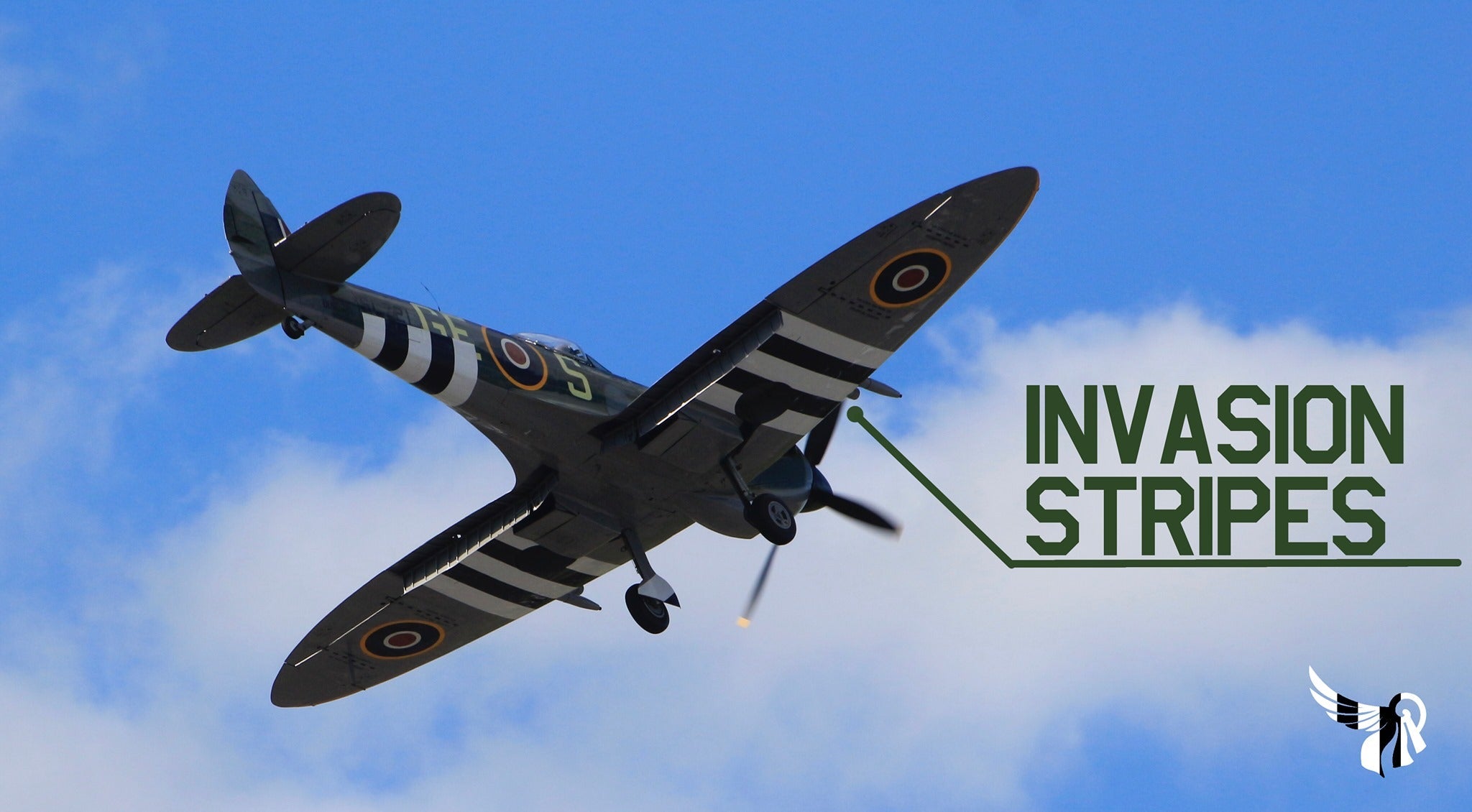
Decades later, the Spitfire arrived quietly—and departed just as quietly. Unfortunately, the call of sleep meant I missed the chance to see its graceful presence once again (mostly due to laziness). All I could do was revisit photos I took at the Paris Air Show last June and reminisce. Compared with the Spitfire that recently visited Hong Kong, the most noticeable difference—aside from the lack of a shiny silver airframe—was the bold black-and-white striping. Behind those stripes lies a story well worth sharing.
The black-and-white markings commonly seen on vintage military aircraft are known as invasion stripes. Their origin dates back to the Allied counteroffensive of 1944. In preparation for the Normandy landings, the Allies assembled the largest air armada in history: 3,467 heavy bombers, 1,645 medium and light bombers, 5,409 fighters, 2,316 transport aircraft, and 670 gliders—a total of 12,387 aircraft. This number roughly equaled the combined military aircraft inventories of China, Russia, and the United States as of 2019. With such a massive force, early operations frequently suffered from friendly-fire incidents, with aircraft damaged or even shot down by Allied ground forces.
A tragic example occurred during Operation Husky in 1943. A formation of 144 C-47 transports (today known as the DC-3) was conducting a paratroop drop along the coast. Although ground forces had been notified in advance, constant air raids left troops exhausted and on edge. Mistaking the incoming C-47s for enemy aircraft, naval vessels and ground units opened fire. The result was devastating: 23 aircraft destroyed, 37 damaged, and 83 lives lost.
Although the air forces had developed IFF (Identification Friend or Foe) systems, the technology of the time could not reliably support thousands of aircraft operating simultaneously—the system would become saturated and fail. Facing the impending Normandy invasion, the Allies urgently needed a simple, direct, and foolproof method to distinguish friend from foe and reduce unnecessary losses. On May 17, 1944, Air Chief Marshal Sir Trafford Leigh-Mallory proposed the invasion stripes—an elegantly simple and highly effective solution.
The design of the invasion stripes was strictly regulated. Each aircraft carried five straight stripes, alternating three white and two black. On single-engine aircraft, each stripe was 18 inches wide; on twin-engine aircraft, 24 inches wide. The stripes were painted on both wings and around the rear fuselage. Four-engine heavy bombers, which were easier to identify, were exempt from carrying the markings.
To maintain secrecy, pilots were unaware of this plan until they saw their aircraft. Painting began just two days before D-Day. Due to manpower shortages and time pressure, aircraft were not rolled into hangars for careful spray painting as they would be today. Instead, each plane was painted quickly by hand with brushes—one by one. As a result, the stripes often appeared uneven and rough on close inspection.
Throughout the Normandy landings, not a single aircraft was shot down by friendly fire. With minimal cost, the Allies solved a critical problem—an outstanding example of clear leadership and practical wisdom under pressure. Once the Allies had secured a foothold on the European continent, the invasion stripes had fulfilled their purpose. As air superiority increased and camouflage on the ground became more important, the black-and-white stripes were gradually removed.
Today, at airshows and aviation events around the world, modern and historic aircraft alike sometimes wear these invasion stripes once more—a tribute to those who took part in the Normandy landings and a powerful reminder of their sacrifice.